Аrchaeological discovery: Тhe discovery of a royal seal – a new step in the study of the history of the Кushan period
Аrchaeological discovery: Тhe discovery of a royal seal – a new step in the study of the history of the Кushan period
As a result of archaeological research conducted by specialists from the State Institution “National Museum” of the Executive Office of the President of the Republic of Tajikistan at the historical site of “Sayyod,” located in the Abdurahmoni Jomi District of Khatlon Region, a rare archaeological find of considerable scientific significance has been unearthed. This discovery may mark a new stage in the study of the Kushan period in the region, providing a solid scholarly basis for reassessing certain existing theories and interpretations concerning its history.
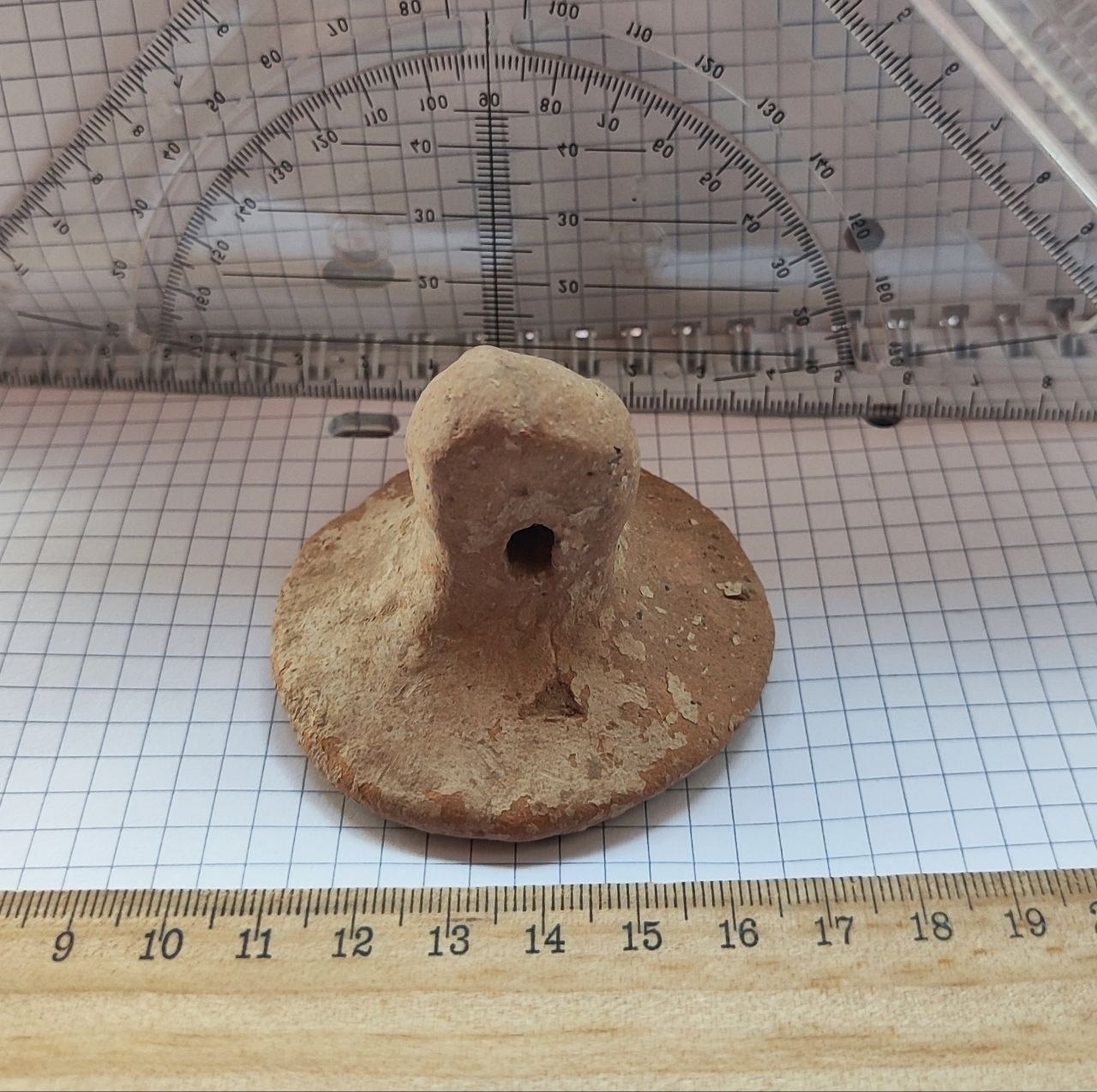
The find is a royal seal made of fired clay, which has been preserved in exceptionally good condition to the present day. The seal is pea-green in colour, measures 5 cm in height, and consists of two principal components. The first component is the seal handle, which features a perforation for threading a cord, facilitating its handling and use. The second, which constitutes the principal body of the seal, is circular in shape and larger than the handle.
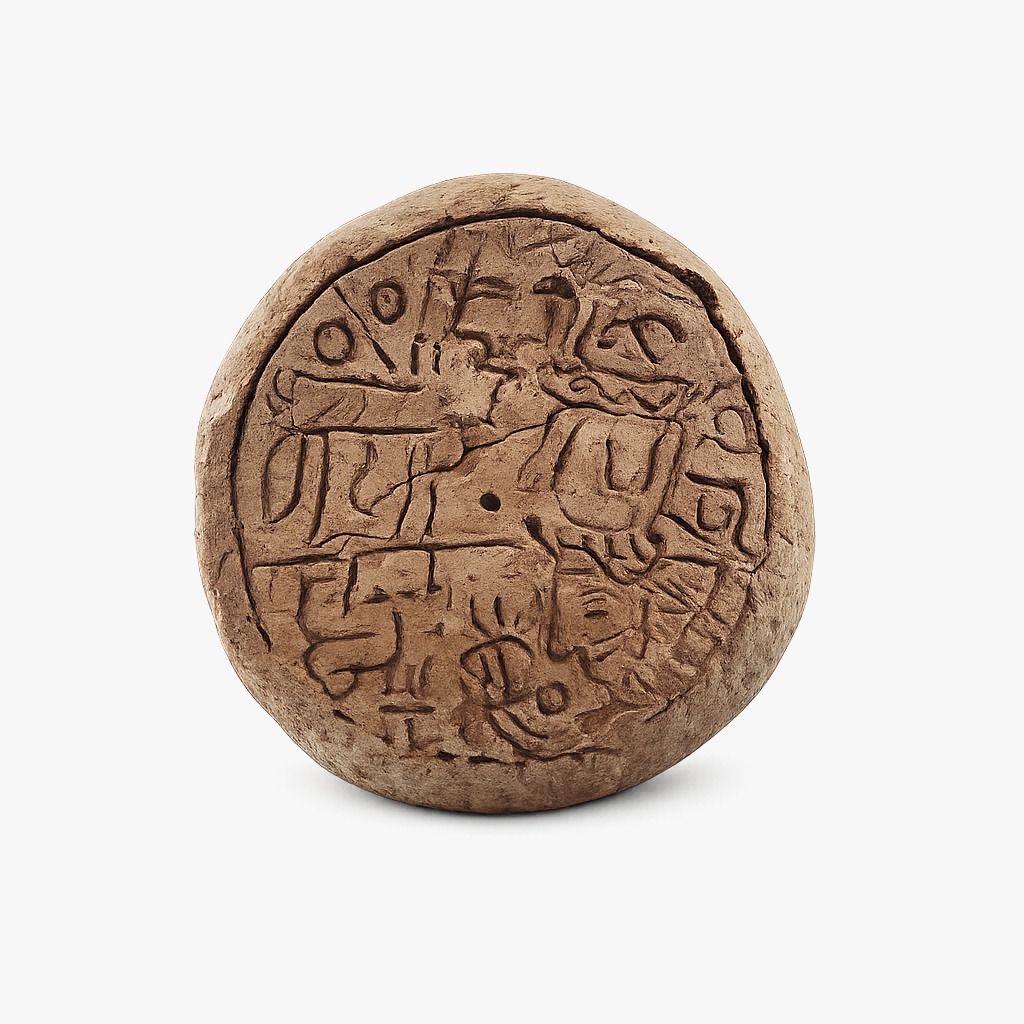
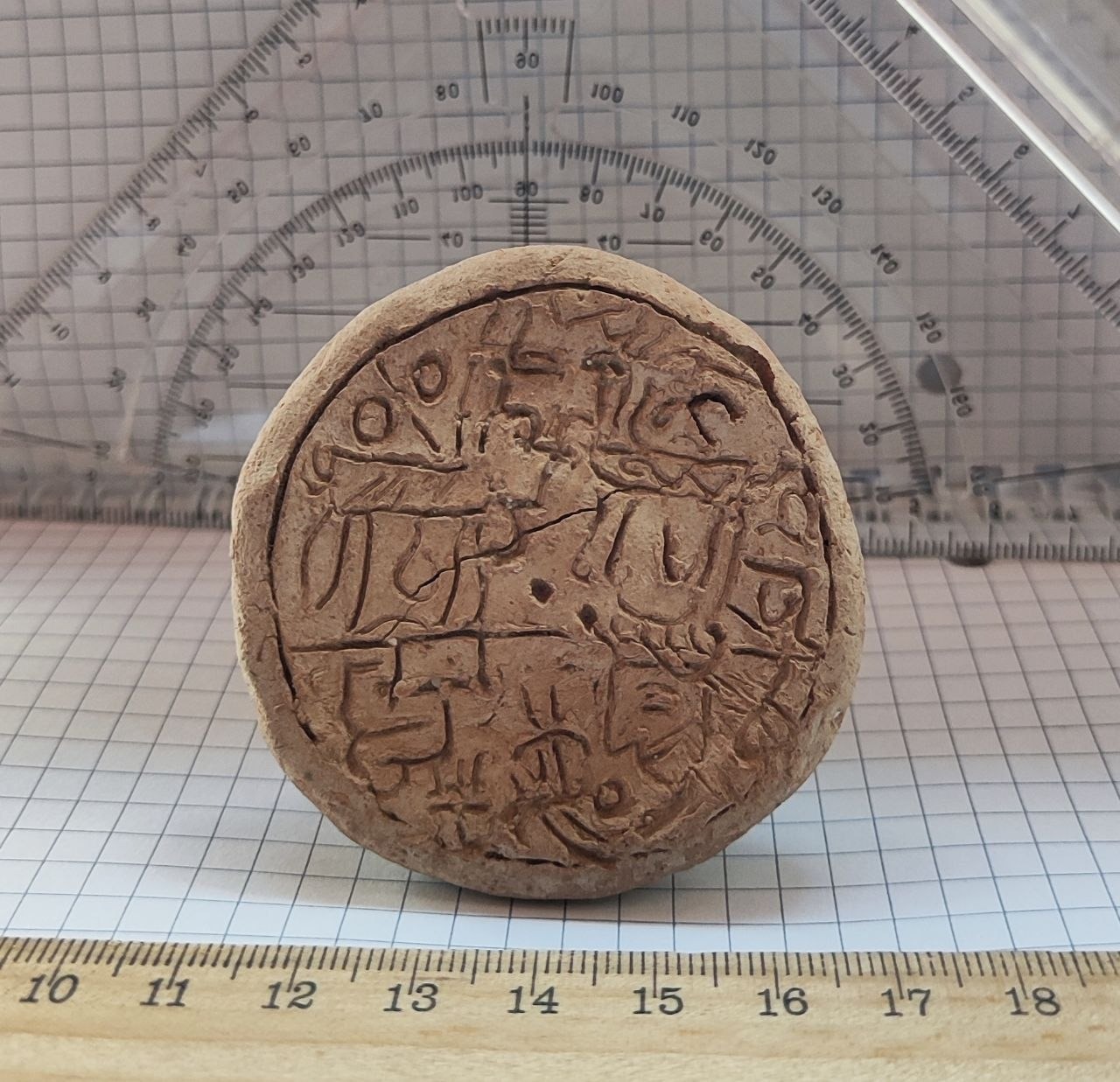
The decorated surface of the seal is engraved within a circular field measuring 6 cm in diameter. The motifs on the seal are arranged in an inverted orientation, a characteristic feature commonly observed in official seals. The composition includes a Bactrian inscription, geometric ornamentation, a bust of a king wearing a crenellated crown, depictions of mountain goats, symbols associated with the royal authority and statehood of the Kushan rulers, as well as motifs associated with the authority of local rulers and other symbolic elements.
The scientific significance of this find lies primarily in the fact that a single seal incorporates a combination of important political, cultural, epigraphic, and artistic elements of the Kushan period. The integration of symbols of royal authority and state power, a Bactrian inscription, the depiction of a local ruler wearing a crown, and other figurative motifs makes this artefact one of the rare examples of the region’s cultural heritage.
The discovered seal is currently undergoing detailed examination, scholarly study, decipherment, and epigraphic analysis by specialists from the Department of Archaeology and Numismatics of the National Museum. Following the completion of comprehensive research, its scholarly findings will be presented to the academic community and a broad circle of researchers working in the fields of history, archaeology, linguistics, epigraphy, visual arts, mythology, semiotics, and other related disciplines.
This discovery represents a valuable contribution to the study of the history of ancient Tajik statehood and Kushan-period civilization, and is of considerable scholarly, cultural, and museological significance.